

Cheviot Hills & Rancho Park: Living in L.A.’s Most-Filmed Suburb


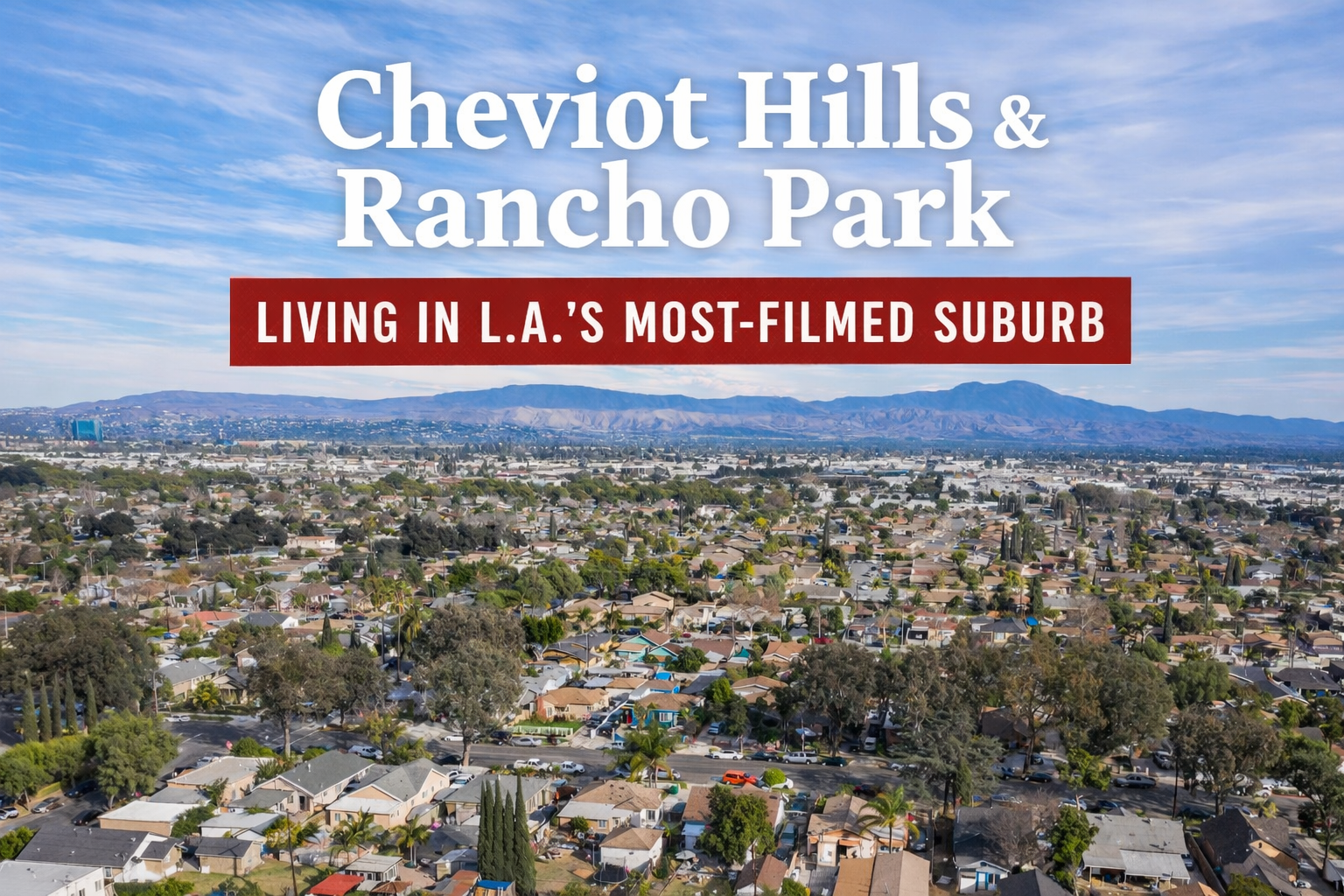
When people think of Los Angeles film history, they picture soundstages in Hollywood, Burbank or Culver City. Yet the quiet, tree-lined streets just south of Pico Boulevard between Century City and Culver City have arguably appeared on screen more than any other suburb in the world.
Welcome to Cheviot Hills and neighboring Rancho Park, a pocket of West L.A. where classic bungalows, golf-course fairways and neighborhood institutions have doubled for everywhere from Manhattan to Denver, and from teen soaps to prestige dramas. For buyers, it means something special: you are not just purchasing a home, you are stepping into a living backlot with a genuine community feel.
A Neighborhood Built Between the Studios
Cheviot Hills was founded in 1924, carved out of former ranch land just as Westside Los Angeles was beginning to boom. From the start, its location was perfect for Hollywood: roughly midway between the original Metro-Goldwyn-Mayer lot in Culver City (today’s Sony Pictures Studios) and the historic Fox lot on Pico Boulevard (now 20th Century Studios).
Developers marketed the area directly to studio workers, actors and executives who wanted a short commute but more space and privacy than the denser city offered. Tudor cottages, Spanish Colonial bungalows and craftsman homes rose quickly along new curving streets like Dunleer Drive, Forrester Drive and Haddington Drive.
As film and later television production moved increasingly “on location,” Cheviot Hills suddenly became far more than a bedroom community. Its streets and parks offered something studio backlots could not: real neighborhoods with mature trees, sloping lawns and the kind of everyday authenticity that makes a scene feel lived-in. By the late 1920s, Laurel and Hardy were already tearing down houses here for slapstick gags and the cameras have never really left.
Twenty-Plus Productions That Put Cheviot Hills and Rancho Park On Screen
On the map above, you can imagine numbered icons sprinkled across the neighborhood. Each marks a home, park or business that movie and TV fans will recognize instantly. Here are more than twenty notable productions anchored in and around Cheviot Hills / Rancho Park, many within a short walk of each other:
The Finishing Touch (1928): Legendary comic duo Laurel and Hardy built (and destroyed) a house at 2830 Motor Avenue, with the “hospital” scenes filmed at 2728 McConnell Drive – one of the very first known location shoots in Cheviot Hills.
Big Business (1929): Another Laurel and Hardy classic, shot on Dunleer Drive; the production famously bought a real Cheviot Hills house simply so it could be demolished on camera for the film’s climactic mayhem.
Bacon Grabbers (1929): The duo returned yet again, filming around 2980 Haddington Drive and 10341 Bannockburn Drive, strengthening the neighborhood’s early ties to Hollywood comedy.
The Ropers : This spin-off about a couple moving up in the world is set specifically in Cheviot Hills, using the community itself as the symbol of an “upscale” West L.A. life.
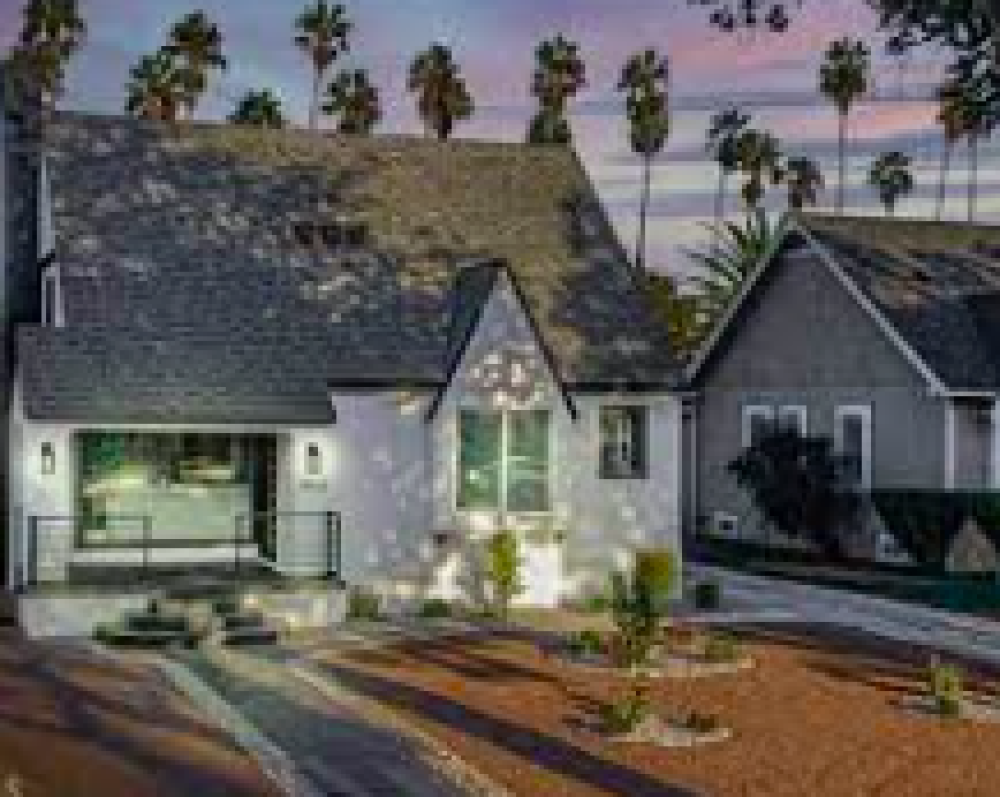
Modern Family:Phil and Claire Dunphy’s “everyday” suburban home is actually at 10336 Dunleer Drive in Cheviot Hills, making the neighborhood’s streets instantly recognizable to fans worldwide.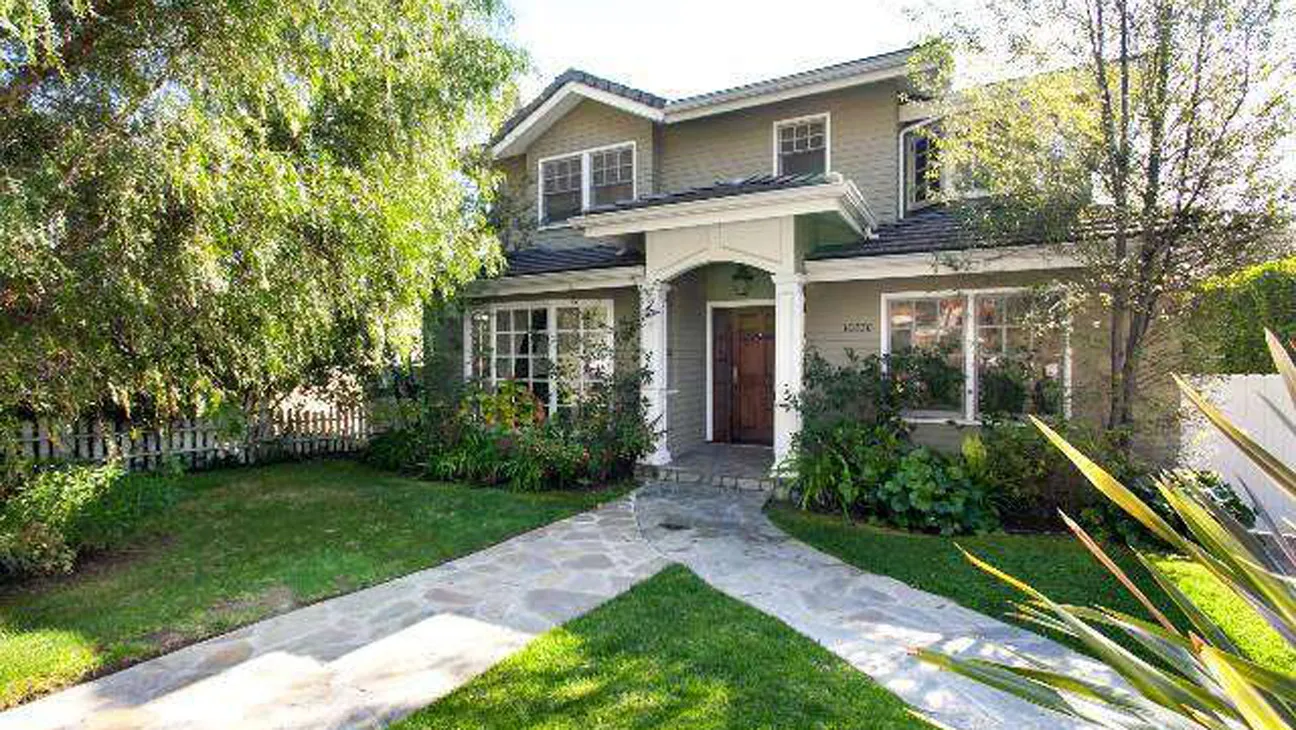
Modern Family: 10336 Dunleer Dr, Los Angeles, CA 90064
The Goldbergs: The Goldberg family’s house sits on Earlmar Drive; establishing shots and exterior scenes showcase the same leafy blocks buyers stroll down today.
American Horror Story: Though the famous “Murder House” is elsewhere in L.A., later seasons and segments have filmed on Cheviot Hills streets, leaning on the area’s deceptively peaceful architecture for unsettling contrasts.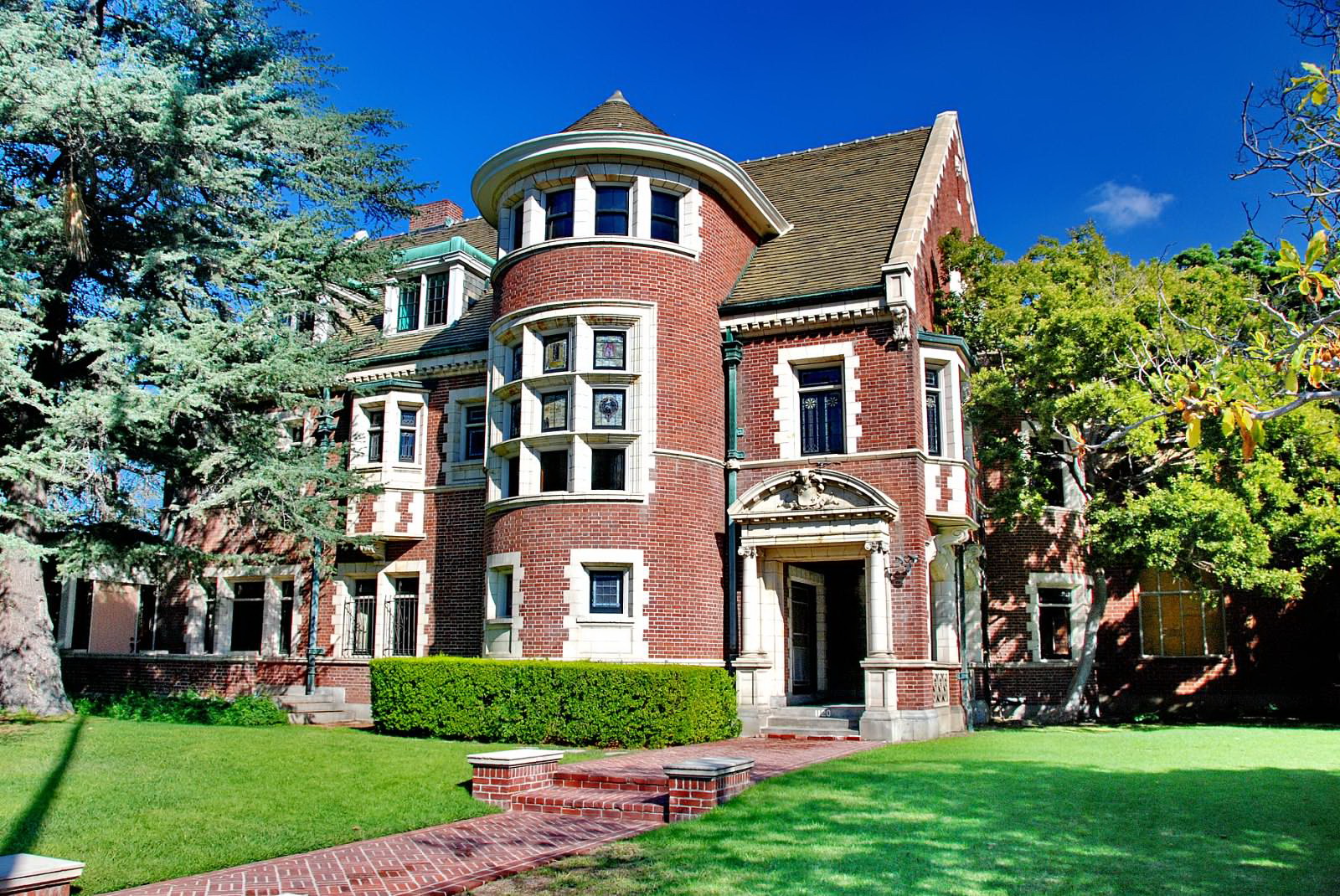
Batman: The colorful 1960s series shot scenes in Cheviot Hills, using its mid-century homes as stand-ins for Gotham’s residential side.
Charlie’s Angels: The original Angels also used Cheviot Hills exteriors, again proving how easily the neighborhood can “cheat” for almost any American city.
The Flying Nun: A house on Cheviot Drive appears in this 1960s favorite, one of several series that turned local homes into recurring characters in their own right.
Nanny and the Professor : The family home from this early-’70s show sits on Glenbarr Avenue, just blocks from where Stan Laurel himself once lived.
Dynasty: The Blaisdels’ Denver home is actually on Lorenzo Drive in Cheviot Hills, a good example of how the neighborhood doubles convincingly for upscale suburbs across the country.
The King of Queens: Houses in Cheviot Hills have stood in for New York’s outer boroughs, giving the show an East Coast feel while shooting just a few miles from major Westside studios.
Seinfeld: “The Understudy” – The charity softball game in this episode, scripted as Central Park, was actually filmed at Cheviot Hills Recreation Center on Motor Avenue.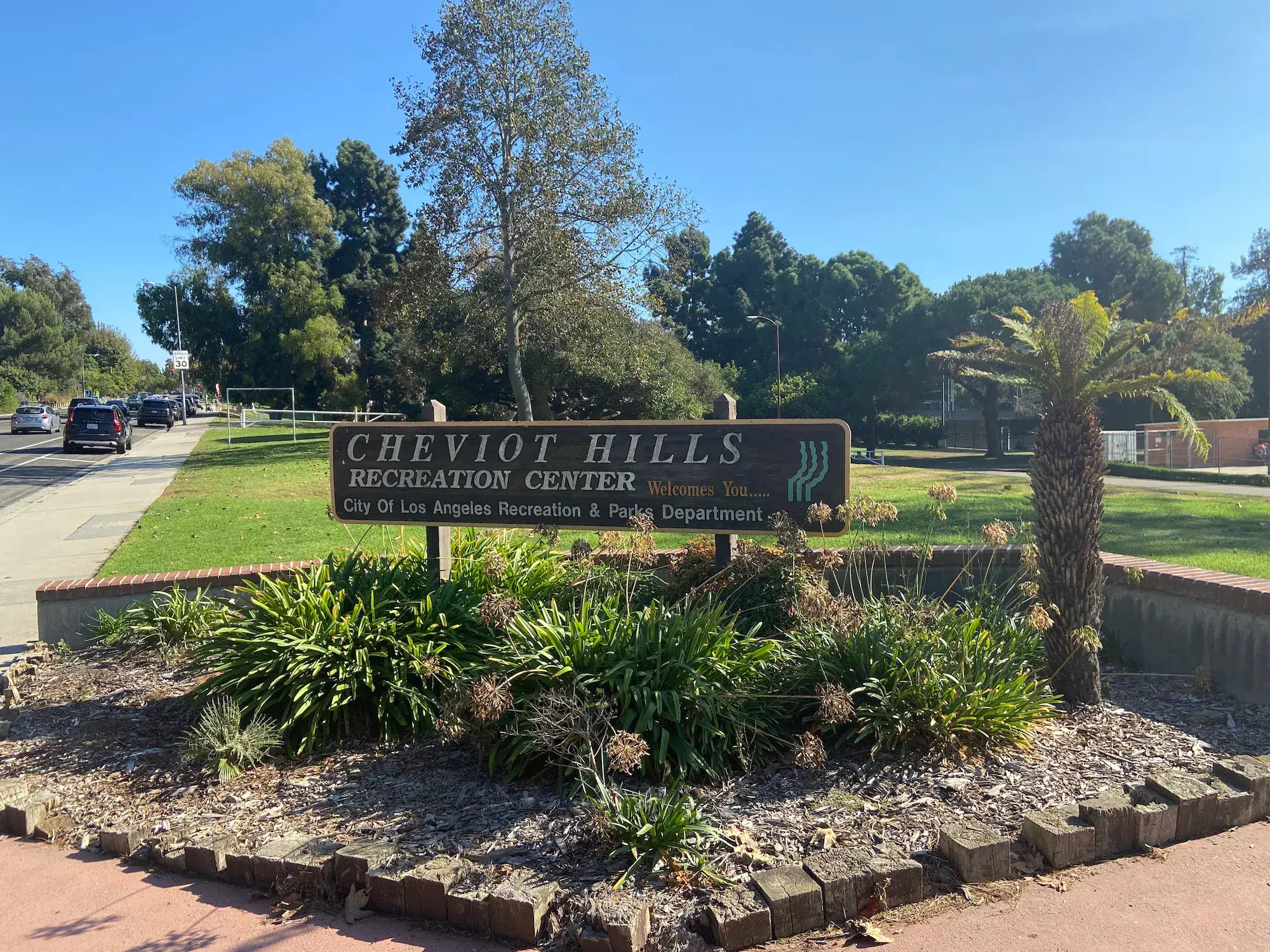
Cheviot Hills Recreation Center on Motor Avenue
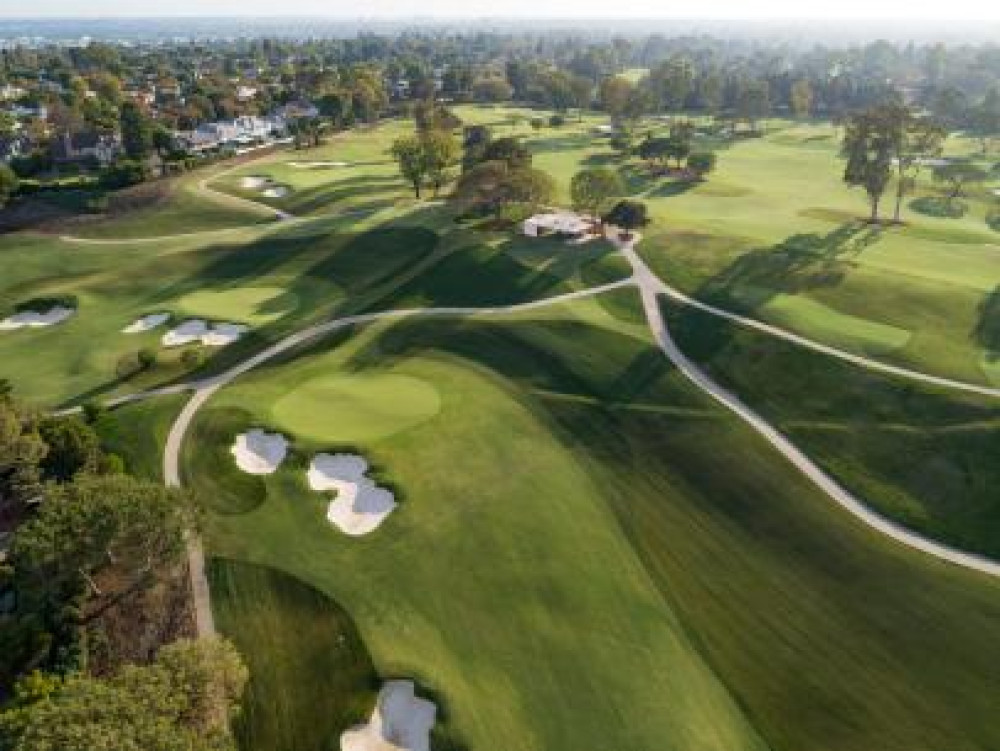
Feud: Bette and Joan, Rancho Park Golf Course, bordering Cheviot Hills, appears in this series about Bette Davis and Joan Crawford, underscoring how the fairways double as both neighborhood amenity and film location.
Curb Your Enthusiasm: “The Benadryl Brownie” and others – Many breakfast scenes were shot at John O’Groats on Pico Boulevard, a beloved Pico-corridor restaurant just north of the golf course.
Comedians in Cars Getting Coffee: “Larry Eats a Pancake” – The very first episode features Jerry Seinfeld and Larry David having breakfast at that same John O’Groats, tying the series launch directly to the neighborhood.
Beverly Hills, 90210: The original exterior of the Peach Pit in season one is actually The Apple Pan, the iconic burger stand on Pico just north of Cheviot Hills, before the show switched to a Pasadena set.
Clueless: Westside Pavilion, the former mall at Pico and Westwood, plays a memorable role; its exterior stands in for Cher’s shopping sanctuary, only a few blocks from Rancho Park Golf Course.
Christmas with the Kranks: Several mall scenes, including the frantic Christmas-shopping sequences, were filmed inside Westside Pavilion, officially in the Rancho Park section of 90064.
Tower Heist: This Ben Stiller and Eddie Murphy film also uses Westside Pavilion, further cementing the mall’s status as one of West L.A.’s most versatile filming backdrops.
Tom Petty’s “Free Fallin’” music video (1989): The now-classic sequence of teens riding escalators and hanging out at the mall was shot here, giving the Westside Pavilion a permanent place in music-video history.
For a buyer, that means your “local” recreation center, golf course, burger joint or coffee spot might suddenly appear on screen the next time you’re streaming an old episode or flipping past a classic movie.